
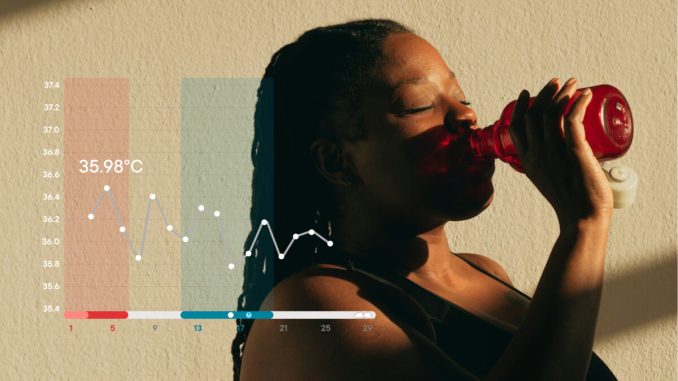
The wellness shift from pushing harder to training smarter
Ever skipped a workout and immediately blamed yourself? Lost motivation halfway through a programme and thought, What’s wrong with me?
Wellness experts say the issue might not be your discipline; it might be your biology.
Mainstream fitness has long been built on the idea that bodies should perform consistently every day. But for people with menstrual cycles, energy, recovery, sleep and mood can fluctuate across the month. Ignoring that can turn “healthy habits” into burnout.
“Much mainstream fitness advice is based on the assumption that bodies perform the same way every day,” says Eve Lepage, Senior Reproductive Health Specialist at Clue, a women-led menstrual health app. “But hormonal fluctuations can shape energy, motivation, sleep, and recovery. A one-size-fits-all training plan can increase burnout, injury risk, and drop-off.”
In other words: the same workout that feels powerful one week can feel exhausting the next even if your fitness hasn’t changed.
The problem with “go hard” culture
January challenges and high-intensity programmes often rely on daily tough sessions and minimal rest. While this can feel motivating at first, the long-term impact can be different.
“High-intensity workouts create short-term increases in cortisol, which is normal,” Lepage explains. “But repeatedly stacking intense sessions without adequate recovery can lead to fatigue, disrupted sleep and burnout.”
For people with cycles, this stress load can sometimes show up in the cycle itself. According to Clue’s medical team, changes such as irregular, missed, or lighter periods can be a sign the body is under excessive strain.
“The menstrual cycle is a vital sign,” says Dr Charis Chambers, Chief Medical Officer at Clue. “Rather than pushing through fatigue, pain or disrupted sleep, people will see greater long-term benefit from adapting workouts to how their bodies feel and using data to understand what’s normal for them.”
Not “cycle syncing” but cycle awareness
You may have seen phase-based workout charts telling you exactly what to do on certain days of your cycle. But experts caution against rigid rules.
“Cycle awareness isn’t about following strict formulas,” says Lepage. “Some people notice they feel stronger in the days leading up to ovulation and more tired before their period, while others don’t notice much difference at all. The key question is: How do I usually feel here? and adjusting accordingly.”
The focus is less on perfection and more on self-knowledge.
What sustainable fitness really looks like
Instead of all-or-nothing intensity, experts point to four foundations of long-term wellbeing:
- Strength training to support muscle, metabolism and bone health
- Adequate recovery, where the body actually adapts and gets stronger
- Flexible cardio, swapping HIIT for lower-impact movement when energy is low
- Listening to bodily signals, including fatigue, sleep disruption and cycle changes
“Sustainable fitness is built around adapting workouts to real-life signals,” Lepage says. “On lower-energy days, that might mean gentler movement instead of high intensity — and that’s not failing the plan.”
The wellness shift happening now is subtle but powerful: from overriding the body to working with it. Adjusting your workout isn’t a lack of discipline. It’s body literacy.
And that might be the habit that lasts longer than any 30-day challenge.
Head to www.helloclue.com for more information and to download the app and learn more about Oura Ring and Oura health insights at www.ouraring.com