
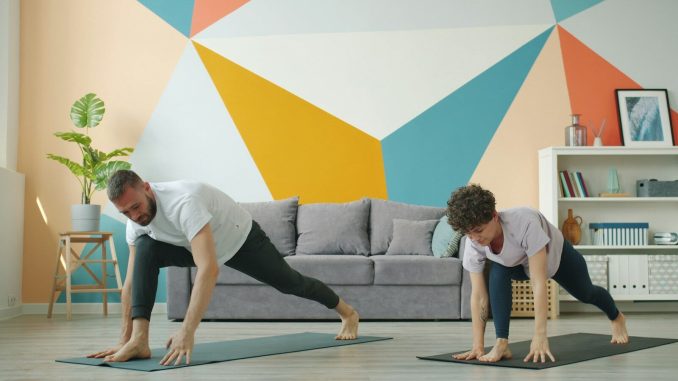
Hybrid working has become a popular choice for millions of people across the UK, offering greater flexibility, improved work-life balance and more time for family, friends and exercise.
While working from home can help reduce stress and the pressure of commuting, spending too much time sitting at a desk can have a negative effect on physical health, explains an expert physiotherapist.
Hybrid working is on the rise in the UK
More than one in four working adults in Great Britain now work in a hybrid arrangement, according to the Office for National Statistics (ONS).
The ONS reported that 28% of working adults were hybrid working between January and March 2025. This shows how working patterns have changed in recent years, with many employees now splitting their time between home and the office.
For many people, this flexibility has brought significant benefits. Avoiding the daily commute can save valuable time and money, while having greater control over working hours can make it easier to manage family responsibilities and personal commitments.
It can also create more opportunities to enjoy hobbies, take part in sport and spend time outdoors. Rather than rushing to catch a train or getting home late after a long journey, employees may be able to fit in a morning walk, a gym session or time with their children.
Why hybrid working can be better for mental health
Hybrid working can support better mental health by giving employees greater control over their time and helping them achieve a healthier work-life balance.
Research published by the Chartered Institute of Personnel and Development (CIPD) in 2025 found that 66% of hybrid workers rated their mental health as good, compared with 59% of people who worked entirely from home or had no access to homeworking. Subsequently, more and more businesses are including hybrid friendly offices in their organisations, creating spaces that allow employees to work jump in and out of the office effectively, whilst maximising resources and office capacity.
Having a mixture of home and office days can offer the best of both worlds. Employees can enjoy the quieter environment and convenience of home working while still benefiting from social interaction, teamwork and face-to-face conversations with colleagues.
Greater flexibility can also help people manage stress and avoid feeling overwhelmed by the demands of work and family life. Being able to attend a child’s school event, exercise during a lunch break or spend less time travelling can make a real difference to overall wellbeing.
A better balance can also help reduce the risk of burnout, particularly when employees have enough time away from their desks to relax and recharge.
However, it is important to remember that working from home does not automatically mean less stress. Employees still need clear boundaries between their working hours and personal lives.
The physical health risks of working from home
Despite the mental health benefits, spending the entire working day at home can be bad for physical health if employees do not make an effort to move regularly.
At Chase Lodge Hospital, a team of expert physios in Mill Hill, North London explain that “One of the biggest problems for remote workers is the amount of time spent sitting in one position.”
“When travelling to an office, people often get a surprising amount of movement without thinking about it. Walking to the train station, climbing stairs, moving around the office, visiting colleagues and going out to buy lunch can all contribute to daily activity levels.”
“When working from home, many of these opportunities disappear. Someone can easily spend eight hours or more sitting at the same desk, with very little movement between starting and finishing work.”
“This lack of movement can lead to stiff and stagnant muscles, reduced mobility and discomfort in the neck, shoulders and back. Sitting in a poor position for long periods can also put additional pressure on the spine.”
“Repeated movements, such as typing and using a mouse, can contribute to repetitive strain injuries, particularly in the wrists, hands, arms and shoulders.”
Why exercise is important for remote workers
Regular movement and exercise are essential for remote workers because they help counteract the physical effects of prolonged sitting.
The NHS recommends that adults aim for at least 150 minutes of moderate-intensity physical activity each week, alongside activities that strengthen muscles on at least two days a week.
This does not mean spending hours in the gym. Simple changes throughout the working day can make a significant difference.
Getting up every 30 to 60 minutes, walking around the house, stretching and taking a proper lunch break away from the desk are all good starting points.
A short walk before starting work or after finishing for the day can also help establish a healthier routine. Remote workers could consider joining a local sports club, attending exercise classes or using their additional commuting time to go for a run or cycle.
How to stay healthy while working remotely
The key to healthy remote working is to combine the flexibility of working from home with regular movement and sensible working habits.
Setting up a comfortable workstation is important. A suitable chair, correctly positioned screen and supportive desk arrangement can help reduce unnecessary strain on the body.
Employees should also make time for regular breaks rather than working continuously throughout the day. Alternating between sitting and standing, where possible, can help prevent stiffness and discomfort.
Hybrid workers should make the most of their office days too, using the opportunity to walk, move around and enjoy social interaction with colleagues.
Ultimately, hybrid working can be a positive change for mental health, family life and general wellbeing. However, it is important not to overlook physical health.
By building exercise and movement into everyday routines, remote workers can enjoy the benefits of flexible working without allowing a sedentary lifestyle to take its toll.