In a recent study we conducted at North West Cancer Research, we found that Liverpool’s communities are experiencing cancer rates at starkly higher levels than the national average.
In Merseyside, which is the most deprived county in the North West, liver cancer cases are 75% higher than the national average, while Lung, trachea and bronchus cancer rates are 59% higher and oesophagus cancer is 39% above the norm.
These statistics are closely linked to the high rates of inequality in Liverpool, as this issue is not only reflected by differences across society in job opportunities, education, skills, transport, housing – but also in health and wellbeing standards. The unbalanced nature of the UK’s health landscape means that urgent, localised support is required to align Liverpool’s deprived communities with the rest of the UK.
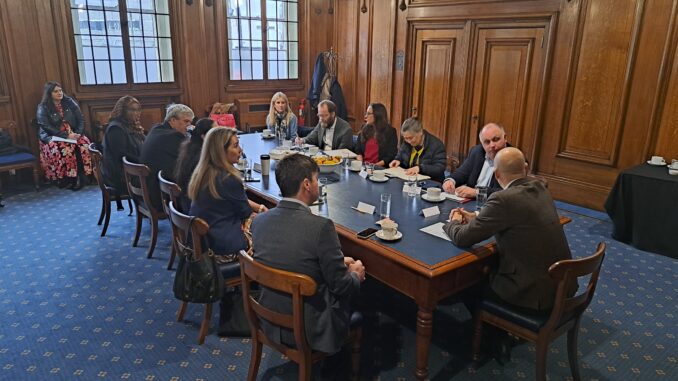
To help understand this complex issue, we brought together influential voices from across Liverpool’s health, politics, charity and academia worlds to reflect on what needs to be done and how we can make changes that will achieve a cancer-free future. During the roundtable, the attendees gave a well-rounded overview of the health challenges facing Liverpool and the steps that need to be taken to resolve the city’s serious health inequalities.
The fact that cancer is tied to people’s genetic backgrounds, environment, housing, income, lifestyles, experiences and the communities they live in was a key talking point. This means that effective cancer prevention and treatment as well as wider health promotion requires the medical world to understand these core determinants of health and the roles they play.
Dan Carden, MP for Walton reflected that: “While we have a health system that is only looking at how we treat illness, and the final stages, and how we prescribe a certain drug to deal with a certain symptom, I don’t see any possibility of restoring society and community to what it could be.”
This is clearly a layered issue, as not only are accurate assessments in this field often very difficult but it’s important that we don’t only focus on what can be measured and risk overlooking that which can’t.
Jane Corbett, Deputy Mayor and Cabinet member for Fairness and Tackling Poverty remarked that a key problem with current measuring methods is that “to get the money, you have to put forward a case that includes outcomes and what you are going to measure”. For Jane this is counterintuitive, as “we want them [local people] to co-produce what the outcomes are going to be so that they’re part of the solution. But currently to get the money, you must predefine something”.
Working effectively within communities was agreed to be a vital part of tackling health challenges. This means understanding the people of Liverpool and how to communicate with them, such as language requirements, communication channels, messaging, and barriers to confidence in public sector organisations.
On this point, Dr David O’Hagan, GP at Brownlow Heath practice in Kensington, said: “We need our primary care professionals to become part of our communities. Increasingly, as primary care networks get bigger, we’re no longer seen as being part of these communities but, instead, we’re seen as being overloaded.”
The need for long term investment in the most deprived areas was mentioned during the roundtable. In addition to this, the groups that are working to improve health outcomes must have confidence in the longevity of the support they receive.
Education and information sharing is also vital. This includes school-based learning as well as commitments to life-long learning opportunities for everyone regardless of age, income, or background. Importantly, education isn’t just the responsibility of schools, as charities, local authorities, and medical organisations should all help ensure that the right information is circulated throughout Liverpool’s communities.