
There are memoirs about surviving illness, and then there are books that explore what happens after survival – when the person who was once told they were going to die has to work out how to live.
Shadow of a Survivor: Memoirs of a Cancer Survivor, by John Walker Pattison, belongs firmly in the latter category.
It is an intensely personal account of cancer, family, fear, resilience and purpose, written by a man whose relationship with the disease has spanned more than half a century.
Pattison was just 18 when he was diagnosed with cancer and given a devastating prognosis: “You will not survive.”
Yet he did.
What makes Shadow of a Survivor particularly compelling, however, is that this extraordinary survival is only the beginning of the story.
From cancer patient to cancer nurse
The young man who once faced the possibility of never leaving hospital would ultimately return to the same hospital professionally, becoming a senior cancer nurse specialist.
It gives Pattison’s memoir an unusual perspective.
He knows the fear of cancer as a patient, but he also came to understand the disease from the other side of the hospital bed: as the healthcare professional attempting to guide frightened patients and families through diagnoses, treatment and uncertainty.
That dual perspective gives considerable weight to his reflections on illness.
There is also something deeply moving about the idea that a place associated with some of the darkest moments of Pattison’s youth eventually became somewhere he could use those experiences to help others.
His story suggests that purpose does not necessarily come from escaping painful experiences. Sometimes it comes from finding a way to use them.
A parent’s nightmare
If Pattison’s own diagnosis were the only major tragedy in his story, it would already make for extraordinary reading.
But eight years after surviving cancer himself, his four-year-old daughter was diagnosed with leukaemia.
It is here that Shadow of a Survivor becomes much more than a conventional story about beating the odds.
Having once been the patient, Pattison suddenly found himself facing cancer as a father.
His own experiences could not protect his daughter, and his medical knowledge could not remove the fear faced by a parent whose child was seriously ill.
The result is an account that inevitably touches on some exceptionally painful territory.
Yet one of the strengths of the book is that it does not attempt to turn suffering into something neat or sentimental. Hope is present throughout, but it exists alongside fear, trauma and uncertainty rather than replacing them.
For readers currently experiencing cancer themselves – or supporting somebody who is – that distinction matters.
Survival isn’t always the end of the story
We understandably celebrate the words “cancer survivor”, but Pattison’s memoir highlights something that can sometimes be overlooked: surviving cancer doesn’t necessarily mean walking away from it untouched.
Decades after his original diagnosis, Pattison has written publicly about the long-term consequences of the aggressive chemotherapy and radiotherapy he received and the complicated psychological reality of living for decades after an illness he was not expected to survive.
That makes Shadow of a Survivor particularly relevant to today’s growing conversation around cancer survivorship and life beyond treatment.
Survival can bring gratitude and joy, but it can coexist with memories, anxiety, physical consequences and questions about why one person survived when another did not.
Pattison does not present himself as possessing a magical formula for overcoming adversity. Instead, his story demonstrates how human beings can continue building lives around experiences they cannot undo.
Music, spirituality and unexpected adventures
Importantly, this isn’t 194 pages confined to hospitals and cancer treatment.
One of the more appealing aspects of Shadow of a Survivor is the way Pattison’s life expands far beyond his illness.
Music became an important source of comfort, particularly the music of British space-rock band Hawkwind. Years later, Pattison found himself working with the band and even appearing on stage at Donington.
There is something wonderfully improbable about that particular trajectory: from a frightened teenager undergoing cancer treatment to standing on a rock festival stage with a band whose music had helped him through those frightening years.
Another important thread is Pattison’s fascination with the history and spirituality of the Lakota Sioux.
During his treatment, he discovered Bury My Heart at Wounded Knee, Dee Brown’s history of Native Americans in the American West. It sparked a connection that would remain with him for decades.
In 2018, Pattison travelled to South Dakota and spent time on the Pine Ridge Indian Reservation – fulfilling a promise he had effectively made to himself during his illness.
These episodes prevent the memoir from becoming defined entirely by disease. Cancer may have dramatically altered the direction of Pattison’s life, but it did not become the sum total of that life.
A book about hope – without pretending everything is easy
Perhaps Shadow of a Survivor’s greatest strength is its understanding of hope.
There is a considerable difference between genuine hope and the sometimes uncomfortable insistence that seriously ill people should simply “stay positive”.
Pattison has lived too close to cancer – personally, professionally and as a parent – to pretend that positive thinking can guarantee a particular medical outcome.
Instead, the hope within this book is quieter.
It is about continuing when life has changed beyond recognition. It is about discovering unexpected happiness after terrible experiences. And it is about accepting that a life can contain trauma and joy simultaneously.
For that reason, this is not only a memoir for people living with cancer.
It has something to say to anyone whose life has been abruptly divided into a “before” and “after” by bereavement, illness or another traumatic event.
Wellbeing News verdict
Shadow of a Survivor could easily have become an overwhelmingly bleak book. The events Pattison has experienced would certainly justify one.
Instead, it emerges as something surprisingly life-affirming.
It is not life-affirming because everything turns out perfectly, nor because suffering is presented as inherently worthwhile. It is life-affirming because Pattison demonstrates just how much life can still exist beyond the moment when everything appears to have fallen apart.
His journey from teenage cancer patient to specialist cancer nurse is remarkable enough. Add fatherhood, his daughter’s illness, Hawkwind, the Lakota Sioux, decades of nursing and more than half a century of survivorship, and this becomes a genuinely unusual life story.
For cancer patients and their families, some passages may understandably be difficult to read. But there is also companionship to be found within these pages: the voice of someone who understands that fear and hope aren’t opposites and can sometimes occupy exactly the same space.
Ultimately, Shadow of a Survivor isn’t simply about refusing to die.
It’s about deciding what to do with the life that follows.
Wellbeing News rating: 5/5
Where to buy Shadow of a Survivor
Shadow of a Survivor: Memoirs of a Cancer Survivor by John Walker Pattison was published by Austin Macauley Publishers and is available in paperback, hardback and digital editions.
Buy the book: https://tinyurl.com/yybnbadh
It can also be purchased directly through the publisher, Austin Macauley Publishers.
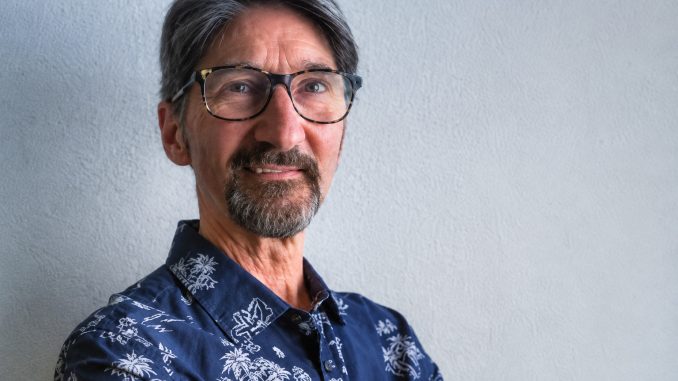
About John Walker Pattison
John Walker Pattison was born in South Shields in 1957 and began working in a local shipyard as a teenager before cancer dramatically changed the direction of his life.
He subsequently built a career in cancer care, eventually working as a senior clinical nurse specialist in haematology at the same hospital where his own cancer had been diagnosed.
Alongside his clinical career, Pattison has written for nursing and medical publications and lectured on haematology and cancer management. Away from medicine and writing, his interests include photography, fly-fishing, Newcastle United and travelling in the United States with his wife, June.
More than half a century after the diagnosis that threatened to cut his life extraordinarily short, his memoir tells the story of everything that came afterwards.