
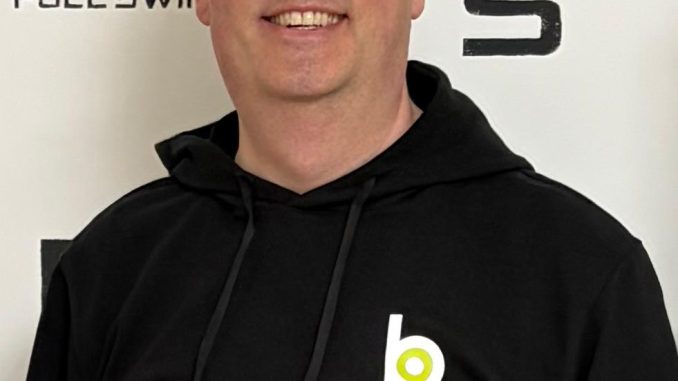
Back Nine UK Managing Director Ashley Poulton explains why technology, changing consumer habits and year-round demand are driving one of leisure’s fastest-growing sectors.
Back Nine Golf is a premium indoor golf franchise concept built around flexible, year-round participation and social play, offering members 24/7 access to state-of-the-art simulator bays. Whether you’re a beginner or an experienced golfer, Back Nine provides the opportunity to play world-famous courses, practise with professional-grade technology and improve your game in a private, high-quality environment.

- What made you believe there was room for another indoor golf concept in an increasingly crowded market?
Indoor golf is only starting to take off in the UK. According to predictions from the R&A and BBC sport, it is going to continue to grow and there’s plenty of room for more indoor golf.
- At what point did you realise this was a business opportunity rather than simply a passion project?
Our founder, Wil Bangerter, set this up more as a hobby and a side hustle to make a little income. He quickly realised the demand for indoor golf and he quit his day job to set this up as a company. Although deep in debt from his education to become a lawyer, he was grateful that after a difficult chat with his wife, they proceeded to set up the company. They’ve not looked back.
- What risks did you see that others weren’t paying attention to?
We focus on the golfer here at Back Nine. Other indoor golf facilities tend to focus on the social scene where large groups have a night out drinking, eating and socialising whilst hitting some golf balls. Here at The Back Nine the focus is golf.
- What’s the biggest lesson you’ve learned about scaling a business?
Having the right vendor partners in place is critical. As you scale nationally, you need suppliers you can trust to deliver consistently across every location. Standardisation is everything in a franchise business. If every venue offers the same premium experience, franchisees can focus on growing their memberships rather than solving operational problems.
- What would surprise people most about the economics of an indoor golf venue?
People are often surprised by how quickly a well-run venue can reach operational break-even. Membership is the key. Building a strong base of founding members in the first few months creates recurring revenue that provides stability while the business continues to grow. Once you’ve established that loyal customer base, the economics become very attractive.
6.The UK has seen explosive growth in competitive socialising over the past decade. What do you think has driven that shift?
Golf has become far more mainstream over the last few years. Social media, professional golfers, content creators and modern golf brands have helped transform perceptions of the sport. It’s no longer viewed as an exclusive members-only pastime. We’re seeing more women, younger players and families taking up the game, and that naturally creates demand for more flexible, social ways to play.
- We’ve seen concepts such as padel, crazy golf and immersive gaming gain traction. Why do you believe indoor golf is becoming the next significant growth category?
Indoor golf solves many of the traditional barriers to playing the game. You can play regardless of the weather, fit a round around a busy schedule and practise using the same professional-grade technology trusted by elite golfers. Whether you’re looking to improve your game, play iconic courses from around the world or simply enjoy a social round with friends, indoor golf offers something traditional golf can’t always provide.
- Many people still think of golf as a traditional club-based sport. How is that perception changing?
Younger generations are embracing the technology side of golf as much as the sport itself. Launch monitors, simulator data and performance tracking have become part of how people learn and improve. Indoor golf isn’t replacing traditional golf, it is introducing more people to the game and making it accessible all year round. BBC sport predicts that in 2028 that 80% of all rounds of golf will be played virtually.
- What mistakes do you think some operators are making as they enter the indoor golf market?
I believe the biggest mistake they make is they don’t make it a premium experience. I’ve seen environments that aren’t even inviting, never mind a premium experience. Golfers want to feel comfortable, safe and welcome so they can have a great experience.
- You talk about indoor golf sitting between traditional golf clubs and entertainment venues. What do you mean by that?
We sit between the traditional golf club and the entertainment venue. Our facilities are designed primarily for golfers who want to practise, play and improve without the distractions often found in larger entertainment-focused venues. Everything is built around creating a premium golfing environment while still being welcoming, comfortable and social.
- How are changing consumer habits influencing the future of leisure businesses more broadly?
People value flexibility more than ever. Finding four or five hours to play a traditional round isn’t always realistic, particularly during the working week. Indoor golf allows people to practise, play nine holes or even complete 18 holes in around an hour, making the game far easier to fit around modern lifestyles.
- Experience-led businesses often depend on repeat customers. Why is customer loyalty becoming increasingly important in today’s leisure market?
Repeat customers are the foundation of any successful membership business. We encourage our franchise partners to build genuine relationships with their members and create communities around their venues. As more indoor golf facilities open, delivering a consistently great experience is what keeps customers coming back week after week.
- What can leisure operators learn from golf’s growth that applies to other sectors?
The biggest lesson is to understand what problem you’re solving for your customers. Indoor golf doesn’t replace traditional golf—it complements it by making the game more accessible, more flexible and available all year round. Businesses that genuinely solve customer problems tend to build long-term loyalty.
- What role does technology play in attracting new participants to golf?
Technology is one of the biggest drivers of participation. Once golfers experience the quality of the data and the instant feedback they receive, it’s difficult to go back. The ability to use the same technology trusted by professional golfers helps players of every ability improve faster while making practice more engaging and enjoyable.
- Do you think indoor golf is replacing traditional golf clubs or complementing them?
They’re absolutely complementary. Indoor golf isn’t competing with traditional golf clubs—it’s supporting them. Many golfers use simulators during the week to work on their game before playing outdoors at the weekend. As a result, many golfers actually end up playing more golf overall.
- If you were advising someone looking to invest in a leisure business today, what trends would you be paying attention to?
I’d look closely at where participation is growing and where technology is changing consumer behaviour. Indoor golf continues to attract significant investment globally, with developments such as TGL bringing even more attention to the category. We’re also seeing more traditional golf clubs and driving ranges installing simulators because they recognise the demand for year-round golf.
- What characteristics do you think define the most successful franchise concepts in 2026?
Timing is important, but so is having a proven operating model and strong support for franchisees. The best franchise businesses provide clear systems, effective marketing, comprehensive training and ongoing operational support. When franchisees succeed, the brand succeeds, so creating that partnership is essential.
- Why do you think some leisure concepts scale nationally while others struggle?
Businesses that scale successfully understand exactly who their customer is and remain focused on delivering what that customer wants. Chasing trends isn’t enough. The strongest brands solve genuine problems, maintain consistent standards across every location and continue adapting as consumer behaviour changes.
- What are the biggest opportunities you see in the UK leisure market over the next five years?
Indoor golf and padel are two of the most exciting growth sectors in UK leisure because both make sport more accessible, social and flexible. Consumers increasingly want experiences that fit around busy lifestyles rather than requiring a significant time commitment, and these activities are perfectly positioned to meet that demand.
- Looking ahead, what do you think the indoor golf industry will look like in 2030?
I believe indoor golf will become part of the sporting landscape in every major town and city. Simulators will become as common as driving ranges, with many traditional golf facilities incorporating them into their offering. The technology will continue to evolve, professional indoor competitions will attract larger audiences, and participation will keep growing as more people discover the convenience and enjoyment of playing golf indoors.
Since selling its first franchise in the USA in 2023, Back Nine has experienced rapid international growth, expanding into the UK, Canada and Australia in late 2025 and selling more than 475 franchises across the US in just two and a half years. Designed as a semi-passive business opportunity, the model allows franchisees to retain their existing careers without the need to hire staff, while also offering multi-unit opportunities with lower start-up costs. Back Nine combines premium 24/7 indoor golf simulation with proprietary technology, including its own app, events platform and performance software, alongside exclusive branding partnerships featuring professional golfers associated with Full Swing. With membership options for both individuals and corporate clients, franchisees benefit from recurring revenue through multiple income streams. At the heart of the experience is industry-leading Full Swing technology, trusted by the world’s elite golfers and used by Tiger Woods in his TGL golf league.
The company is currently seeking franchise partners across key UK regions as part of its planned national expansion programme. For more information visit https://backnine.co.uk/franchise/