
To mark World Autism Acceptance Month, two service users from Birmingham-based Cygnet Health Care services have shared their personal experiences of living with autism, offering honest and insightful reflections on diagnosis, identity and everyday life.
The individuals, who are supported at Cygnet Elms and Cygnet Cedars, have spoken in their own words to help improve understanding of autism and challenge common misconceptions.
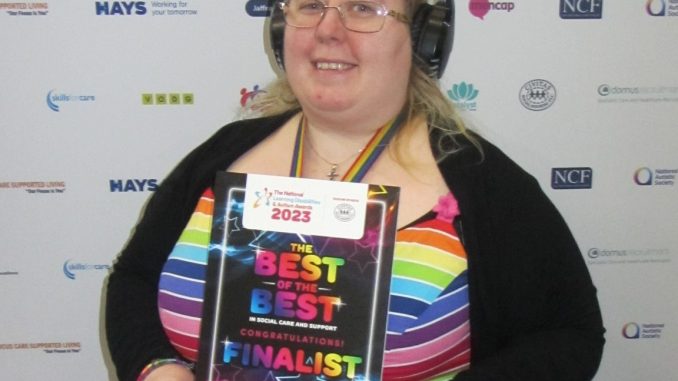
Vicki, a resident at Cygnet Elms, on Streetly Road, described how, from an early age, she felt different to those around her. She said: “I knew that I was very different to other people and that other people were experiencing different things to me. I could see that other people would be able to do things easily, that I found really hard – like going to the shop, going outside or processing school.”
She explained that she was initially diagnosed with ADHD, but later realised her autistic needs were not being met. She said: “I was first diagnosed with ADHD as those symptoms were more obvious at first. However, after being medicated for my ADHD, it became clear and evident that my autistic needs were not being addressed. It was especially evident that I struggled with sensory sensitivities especially noise sensitivity and the struggles with regulating myself.”
Reflecting on receiving an autism diagnosis, she said: “For a long time, I was ashamed of my diagnoses. All of them. I didn’t want to be different from others and I was so desperate to fit in and be ‘normal’, not realising that normal doesn’t exist. I felt as though the diagnosis of Autism would mean that I was less than other people and wouldn’t be valued or able to find or maintain jobs and friendships and access day to day life.”
She spoke positively about the support she receives, adding: “Being a LD&A specialist hospital, Elms really understand my needs, right from their very roots. Elms strive to provide me with all the support I need to reach my full potential. Life isn’t easy, but Elms help me to navigate my way through the difficult times, and the day to day difficulties that I have. They help me to see a bit of hope, no matter how dim it seems.”
Her perspective has evolved over time, and she now speaks with pride about being autistic. She said: “With companies like Elms, and Open Theatre Company, my opinion of my Autism has changed. I am now proud to be autistic and I champion autism- even to the point of studying it at PhD level!”
However, she highlighted that misconceptions remain a significant issue. She said: “People assume that because you are autistic you can’t do things. Or the opposite- people assume that because I am academically advanced (studying a PhD) that I can do things that I actually find really challenging – like practical things such as crossing a road, cooking, cleaning, or even processing information.”
She also described both the challenges and strengths autism brings. She said: “One of the greatest things about living with autism is that I can use it to inspire others. Autism can be really disabling for me – such as struggling with crossing roads due to the sensations of the wind, that child screaming, that motorbike revving, that siren, the speed of the car, and the need to catch a bus – all which overwhelm me to the point that I forget the basics of how to be safe. However, being autistic is also my superpower as it provides me with a wealth of creativity that I can use to help me problem solve and share my life stories with other people in a creative way.”
She added: “There are still a lot of common misconceptions. One of the worst ones is that “everyone is a bit autistic”, and another worst one is “high functioning / low functioning” labels. These common misconceptions do not help the autistic community as it is now acknowledged that “once you know one person with autism, you know that one person with autism” meaning that you cannot assume things about a person due to their diagnosis as we are all different and our experiences are different.”
She concluded: “Autism is both disabling and a superpower. It is not one or the other. It is both. I really struggle with some aspects of life due to being autistic, but I wouldn’t be doing my PhD if I wasn’t autistic- as I wouldn’t have the patience and determination and special interest in it – giving me the hyperfocus I need to complete such a high level degree!”
Another service user, Eddie, a resident at Cygnet Cedars, shared his own experiences of autism, including how his understanding of himself has developed over time. He said: “Up until 1984, life was good. After that, things started going downhill as I began to worry more about things. When I was younger, I didn’t worry about small things like fidgeting, even if I sometimes felt like something was “wrong” with me.”
He explained that he was diagnosed in 1996 following an assessment prompted by concerns from those around him. He said: “I was diagnosed in 1996 after going to an assessment centre. Both my parents and teachers knew that something wasn’t right, which led to me being assessed.”
Reflecting on his diagnosis, he said: “I felt a bit nervous but also relieved. It helped me understand the little things I was doing or feeling, and I could finally just be “me”. It made me feel like there was a reason for the challenges I had faced and helped me understand myself better.”
He spoke about the supportive environment at Cedars, saying: “It’s nice because the patients aren’t scary, and there are lots of activities going on. I can send letters to my friends. The staff are understanding and will explain things multiple times when I get anxious.”
Eddie explained that his diagnosis has not changed who he is. He said: “I don’t feel very different about myself since receiving the diagnosis. I am still “me”. The diagnosis just helped explain some of the ways I was feeling. People haven’t really changed how they treat me, and my relationships have stayed the same.”
He described some of the challenges he faces day to day. He said: “Living with autism can be very difficult for me. Some things that other people find easy can feel overwhelming or stressful. I often struggle with routines and worries, I worry about every little thing.”
He also highlighted ongoing misconceptions. He said: “No, I don’t think people have much understanding of autism. Some people think we have speech difficulties, no communication skills, or don’t say much, but autism is different for everyone.”
He added: “People also sometimes believe we are not smart or can’t use our brains properly, but that isn’t true. For example, I am good with dates. If someone tells me their date of birth, I can often work out what day it falls on.”
Discussing both challenges and strengths, Eddie said: “Some of the challenges I experience include sensitivity to sounds and textures. I find it difficult to interpret verbal and non-verbal communication. I can have repetitive behaviours and complicated or overwhelming thoughts.
“In terms of strengths, I have strong interests in things like music, dates, cars, trains and churches. I have a very high attention to detail and notice things that others might miss.”
Cygnet Cedars, on Broadway Avenue, Bordesley Green, is a 23-bed high dependency complex care service for men with learning disabilities, part of the Cygnet Health Care division.
Cygnet Elms, on Streetly Road, Birmingham, is also part of the Cygnet Health Care division and is a 10-bed care service for women with learning disabilities and autism.
