
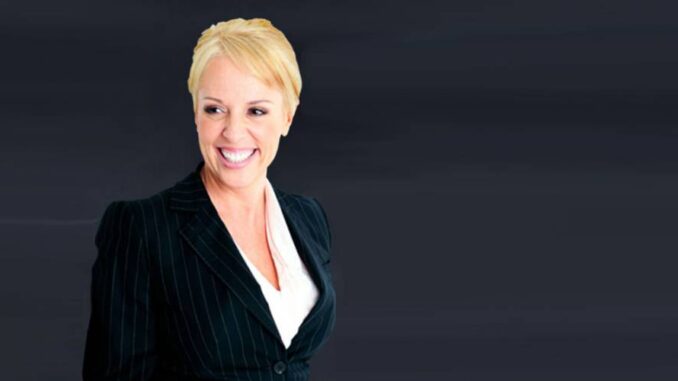
Wendy Dignan is one of the UK’s leading mental health and wellbeing speakers, renowned for her practical, science-backed approach to overcoming anxiety, stress, and emotional challenges.
With decades of clinical experience, Wendy has helped thousands of clients transform their thinking, break free from negative patterns, and build resilience in both personal and professional settings. As a trusted voice in cognitive behavioural therapy (CBT) and solution-focused mental health, she empowers audiences with actionable strategies that deliver real, lasting change.
In this exclusive interview with Champions Speakers, Wendy shares her expert insights on the importance of seeking help, the true meaning of self-care, and why her distinctive therapeutic approach offers hope to those seeking more than just surface-level support.
Q: Wendy, in the mental health landscape today, just how critical is it for people who are struggling to actively seek out help — and what options do they have if they feel isolated?
Wendy Dignan: “It’s really important. When you think about those three pillars of happiness that we always work with, it’s really important. I know that some people are more isolated than others, but there are lots of different ways to do that.
“There are lots of support groups, there are lots of chat groups, you know, that you can do virtually. Even people that are isolating themselves — maybe their health is a little bit more precarious — there are lots of ways to access that, even if you haven’t got friends and family around you. It’s one of the most important things you can do.”
Q: You’ve worked with many clients navigating anxiety and stress. Drawing on your experience, what personal strategies do you now use to manage stress and maintain emotional resilience in your own life?
Wendy Dignan: “It’s a bit of a debatable topic, but I’m of the opinion that anxiety and stress shouldn’t be a feature of your day-to-day life. There’s a lot of talk and debate about whether somebody that suffers with anxiety should always suffer with anxiety, and I can definitely tell you that’s not the case.
“I tell clients that if I do a good enough job, anxiety isn’t going to be part of your day-to-day life. That’s not to say that when life sends you a bit of a curveball you won’t have an anxious reaction to it — that’s your safety mechanism, that’s how you’ll react. But anxiety should not be a part of your day-to-day world; it shouldn’t be something you almost give a second thought to.
“Once you realise how anxiety fits together, you know the things to do that you adapt as part of your life. There’s lots of things that I do — I’m a huge outdoorsy person, I love nature, I’ve got horses, I’ve got a farm. That stuff, even though it’s really hard work, particularly in winter, that’s all the stuff that keeps me on the straight and narrow.
“No matter how difficult a day I’ve had at work with some really traumatic clients and listening to that sort of trauma on a daily basis, going home, even in the wind and the rain and the mud, keeps me on the straight and narrow.
“So, I know the things to do that keep me in my optimal place. Obviously, when I’m working with clients, that’s exactly what I do — I help them to find that space, obviously tackle the anxiety, and give them that toolkit to make sure that’s where they stay, but also how they maintain it in the future.”
Q: There’s a lot of conversation around ‘self-care’ these days, but the meaning can vary widely. How do you define true self-care, and why is it such an essential foundation for long-term wellbeing?
Wendy Dignan: “Self-care is different for everybody. It’s about what you need to do for yourself to keep your mood at the right level for you, and that can be different. But it’s about what you need to do in your world.
“First of all, it’s probably adjusting a gap. Often, for people when they start off, there’s a gap between where they’d like to be and where they are currently. So, it’s looking at different levels of self-care — relaxation, nutrition, engagement with other people. It’s things that you can do to get yourself to a better place, and then it’s all about maintaining how you do that.
“A big thing with starting self-care is learning to prioritise yourself. It’s that old adage of fitting your own oxygen mask first. We’re often about compromising our own well-being for everybody else around us, particularly if you support families and other people. It’s very much about deciding that you’re going to prioritise your own self, and then finding ways to do that that work for you.”
Q: You’ve developed a distinctive, solution-focused therapeutic approach. In your view, what specifically sets your method apart from more traditional counselling models — and why do you believe this difference matters for clients seeking real change?
Wendy Dignan: “I think my approach is different because I’m very cognitive, very practical. I don’t use sort of psychobabble; I think I’m very accessible. Clearly, the science background is all there — the degrees and all the training and years of constant training actually for registration. But I think my experience and the person I am as an individual mean that working with me is quite different to most.
“A lot of people that I work with appreciate that I’m very straightforward. I’m very honest with people; I can quickly get into people’s problems and where the problem exists. I predominantly use cognitive behavioural therapy because it’s so practical, and look at what people are doing in terms of the behaviour and what people are thinking, and look at core belief things.
“I’m also quite keen on something called schema therapy, which is about the rules that people develop for living, which can cause problems for them. So, looking at all those things, we mind map where the problem exists and how to do it differently. It’s very solution-based; it’s very scientifically evidence-based, and we have a direction of travel.
“Obviously, the goal is whatever the problem is that’s driven them through the door. But we sit down, we look at what the problem is, and look at how we’re going to solve it. So, it’s the pieces of a puzzle, and we look at pulling the pieces apart and putting them back together in a different way.
“My model of working with people is very different to somebody like a counselling model — it couldn’t be more different than that. My soapbox topic is the fact that the whole industry is unregulated, and that you can set up in the morning and call yourself a counsellor.
“The problem with that is clearly that people are unqualified, but the bigger problem for me is that they can do that very cheaply because they haven’t the overheads of years and years of training and continuous training and professional accountability.
“Also, people go and see them very cheaply, and then they come away thinking that they can’t be helped. That, for me, is the big problem. So, what I do and what I offer people are solutions, and that’s very, very different to something like a counselling model or, you know, the person that is in coaching and then starts to get involved in mental health. That’s all very problematic for everybody in the mental health field and for the public wanting help.”
This exclusive interview with Wendy Dignan was conducted by Sophia Hayes.
