
October 2023 is the sixth annual Speak Up Month, which is led by the National Guardian’s office and provides an opportunity to raise awareness and highlight the difference which Freedom to Speak Up is making.
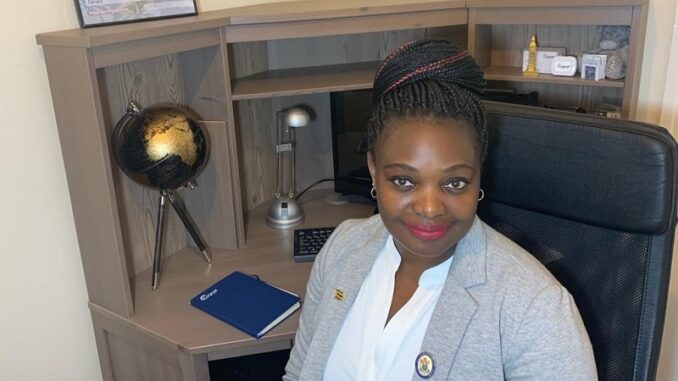
Agnes Tutani is Cygnet Health Care’s Freedom to Speak Up Guardian. She explains the importance of creating a culture where staff are comfortable speaking up and sharing concerns.
She says:
Across Cygnet Health Care and Cygnet Social Care services, we want to ensure that all staff are empowered to speak up regardless of their role or background. Throughout Cygnet we have worked tirelessly to ensure that each site has a Freedom to Speak Up Ambassador and that a culture that is open to staff speaking up is weaved through the fabric of the organisation.
Today we have more than 180 Ambassadors across our many sites. It’s a real achievement and something that gives us a sense of pride, that we are embracing this culture, and we are saying this is our direction of travel as an organisation.
We want to make sure that we are protecting our patients’ safety at the same time, and also making sure we are improving the lives of all our workers within Cygnet. We spend so much more time at work than we do anywhere else, so it’s important that staff feel that there is a safe way that they can raise concerns, and there aren’t any repercussions for doing so.
It’s exciting to think about every individual Ambassador that we’ve had within the organisation come forward. Most importantly, it’s a voluntary role and it’s people that have identified and recognised the benefits of having Freedom To Speak Up within their service and being that go-to person that someone can go and ask questions, or someone that they can raise a concern with.
People who choose to become FTSU Ambassadors are people that are passionate about the culture in the workplace, people that are passionate about patient safety. Importantly, it’s been people from all different kinds of roles; from our doctors, support workers and our admin teams, which really creates a good network, and that diversity, that we can all learn from each other, within the network and within the organisation.
My role within the organisation is to give staff an extra level of support if they are worried, unsure, concerned or feel they can’t talk to someone within their line management or in their team. By speaking up, the hope is that anything that is getting in the way of high-quality effective care, or that affects their working life, can be identified early and that potential harm is prevented.
At Cygnet, there are many channels for speaking up – from a discussion with a line manager to submitting suggestions for improvements. They can raise concerns anonymously if they choose to and it is treated confidentially. Or they could use our whistleblowing helpline, an independent helpline, which is available 24 hours a day, to raise that concern by phone or by email.
Staff can also raise concerns in person with us openly, and we can then give feedback with regards to what the next steps are.
Most importantly when we have concerns being raised is that staff feel that they’re listened to and that there is that feedback. Following-up closes the loop and ensures there is the opportunity for change, learning and improvements. People will only have the confidence to speak up if they feel that their voices are heard and that they see evidence of the organisation listening and acting on their concerns. By following-up with good quality and independent investigations, we ensure that every opportunity is utilised to learn as an organisation. Ultimately this will allow the organisation to deliver better care, share knowledge to identify best practice and review guidance where necessary.
When we Speak Up, we demonstrate that we care and respect, not only each other but those in our care. When we all take personal responsibility to speak up, listen up and follow up we enable an open culture which contributes to keeping our services safe, promotes learning and improves the experience of all our staff.
The sign of a healthy organisation, is one that listens to its people. We have learnt that the healthiest – and safest – cultures for patient care are those that are aware, are transparent and are reflective. All of these values are fed by the one crucial skill that we all possess; that is to listen. Dangerous cultures are bred when silence multiplies and staff who do the caring, don’t feel they can discuss what they see, question what perhaps feels wrong, and be supported to raise questions.
Staff need to feel heard and understood, and leaders must demonstrate that they are open to new ideas. Leaders who do not listen will eventually be surrounded by staff who have nothing to say. A valued, motivated and committed team will improve the care outcomes of service users, so listening is at the very core of better service delivery and improving the lives of our service users.
As part of Speak Up month, I urge all those working in the health and social care sector to raise awareness of Freedom to Speak Up Guardians to help foster a culture which will improve the care provided to those who need it.


