
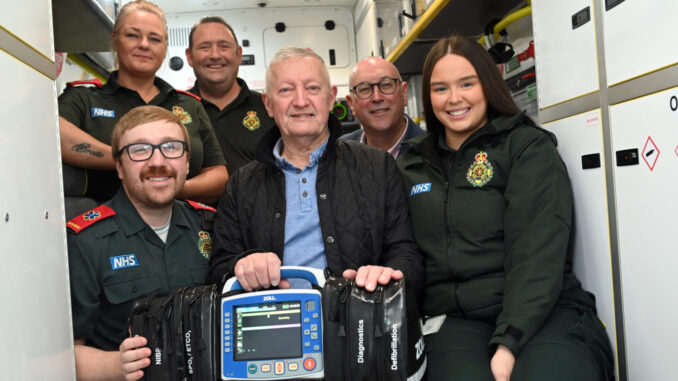
Knowing CPR can mean the difference between life and death, as proven by the story of Sunderland resident George Newman, who survived a sudden cardiac arrest thanks to fast action by his family and emergency responders.
George, 73, began experiencing chest pain after a family firework display on November 2. Sensing something was wrong, his wife, Brenda, immediately called 999. Ambulance dispatcher Ellen Renwick quickly sent a response team from North East Ambulance Service (NEAS), including paramedics Stuart Tait and Ian Cawood.
When the crew arrived, George’s condition deteriorated, and he went into cardiac arrest. Paramedics performed chest compressions and used a defibrillator, administering five shocks to restart his heart before rushing him to Freeman Hospital for an emergency stent procedure.
Dr. Michael Norton, consultant community cardiologist for South Tyneside and Sunderland NHS Foundation Trust, highlighted the critical role of early CPR. “A cardiac arrest can happen to anyone, anywhere, at any time. Every minute without CPR and defibrillation reduces the chance of survival by 10%. Immediate action by family members or bystanders saves lives.”
George received post-hospital support from the NHS cardiac rehabilitation team, which not only helped him regain strength but also provided CPR training for his family.
Now recovered, George was recently reunited with the ambulance crew that saved his life.
“CPR is a skill everyone should learn,” said Dr. Norton. “Even if you have no formal training, hands-only CPR can keep a person alive until emergency services arrive.”
George now sees life differently. “Since my cardiac arrest, I value every single day. I wanted to meet the ambulance crew to personally thank them for giving me more time with my family.”
This story highlights the need for widespread CPR awareness. If someone collapses and is unresponsive, start chest compressions immediately and call 999. To learn CPR, visit organizations like the British Heart Foundation or Resuscitation Council UK.
Dr. Norton’s advice is simple: “Be prepared. Learn CPR. Your hands could save a life.”