
- More than a third have lived with debilitating back pain for over a decade.
- 74% feel their condition is downplayed by family, friends, or employers.
- Despite scans and specialist care, just 9% found lasting relief from conventional treatments.
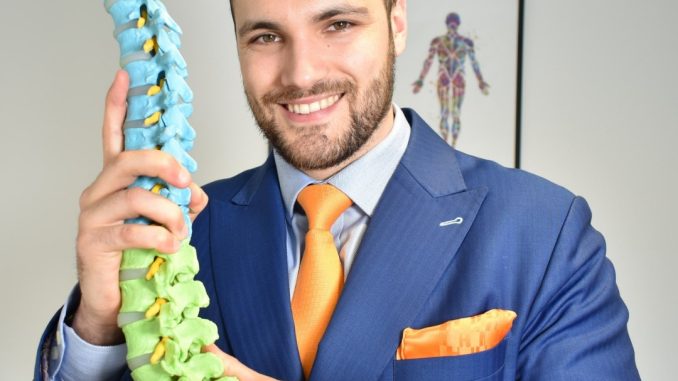
- Leading osteopath Michael Fatica advocates for a shift toward resistance-based rehabilitation.
A new UK survey of people living with back pain and sciatica has revealed the long-term impact of the condition, alongside a widespread lack of understanding and empathy.[i]
The survey found that nearly nine in ten respondents (88%) have lived with back pain for more than a year, while more than a third (37%) have experienced symptoms for over a decade. Despite the severity of their condition, many reported that back pain is still dismissed as a minor or short-term issue.
Almost three quarters (74%) said their back pain is often downplayed or not taken seriously, while just 26% felt it is recognised as a legitimate and debilitating condition. More than two thirds (69%) reported feeling pressured to “push through” pain, even when in significant discomfort. Pressure came most often from those closest to them: 57% cited family, 57% friends, and 44% employers.
Michael Fatica, lead osteopath and co-founder of online back rehabilitation programme Back in Shape, which conducted the survey among its patients, said these findings reflect a deeply ingrained cultural misunderstanding around back pain.
“Back pain is still widely seen as something people should be able to ‘get over’, yet for many it is persistent, complex and profoundly disruptive,” he said. “It affects confidence, mental wellbeing, relationships, and a person’s ability to participate in everyday life.”
The survey also highlighted the impact on daily living. Nearly nine in ten (86%) said back pain affects their hobbies and leisure activities, 76% reported a negative impact on social life, 64% experience disrupted sleep, and 63% said it affects their ability to work. Just 3% said their back pain has no impact on daily life.
“Poor sleep and reduced activity create a cycle that makes recovery more difficult and increases the risk of further physical and emotional strain,” Fatica added.
Despite extensive engagement with healthcare services, long-term relief remains rare. Almost three quarters (71%) reported having MRI scans, 52% had X-rays, 87% had tried physiotherapy, 68% saw a chiropractor, and 49% consulted a specialist. Yet only 9% found these interventions provided lasting relief.
“Many patients follow all the advice and attend all appointments, yet are left feeling stuck and unsure if their pain will ever improve,” Fatica said.
According to Fatica, lasting improvement often requires active participation in rehabilitation, focusing on rebuilding strength in muscles that support the spine rather than relying solely on passive treatments.
Despite their importance, only 56% of patients were offered squats, and just 36% were shown hip-hinge movements as part of rehabilitation. Fatica calls this a worrying missed opportunity in both recovery and prevention.
“Strong back, core, and leg muscles stabilise the spine and reduce strain on spinal structures. Weakness leaves the back vulnerable to injury and ongoing pain,” he said.
A mere 7.3% of men and 4.1% of women meet the strict muscle and bone-strengthening guidelines – UK guidelines currently recommend more than two x sessions per week targeting major muscle groups.[ii] Michael believes this only increases the risk of minor injuries becoming long-term problems.
“Back pain is not an inevitable part of ageing. With the right approach, many cases can be mitigated or even prevented,” Fatica said. “Strength-based exercise, alongside good nutrition and healthy daily habits, is crucial for building resilience and protecting the spine.”
He also emphasised the need for greater public education and cultural change.
“We need to move away from the idea that people should simply ‘push through’ pain. Listening to the body, understanding pain signals, and addressing weaknesses early can profoundly improve long-term outcomes and quality of life.”
Michael recommends incorporating the following resistance-based exercises into daily fitness regimes to help both manage and prevent back pain:
The Squat – 10 repetitions total, repeat 3 times at your own pace
- Stand with your feet shoulder-width apart
- Your feet should be facing forwards or slightly outwards
- Bend your knees and push the hips back and keep your back straight
- Picture yourself sitting on a chair
- Then drive through your feet & slowly return to the starting position
The Hip Hinge – 10 repetitions total, repeat 3 times at your own pace
- Start with your feet shoulder width apart with good posture and slightly bent knees.
- At the hips slowly lower your torso like a drawbridge without bending your knees.
- Lower until you feel the back of your thighs stop you from going further.
- Then return to the starting position
For more information, including expert advice, videos and podcasts related to back health and rehabilitation, please visit www.backinshapeprogram.com.
[i] Survey conducted among 100 Back in Shape patients. Findings released Feb 2026.
[ii] https://journals.plos.org/plosone/article?id=10.1371/journal.pone.0267277