
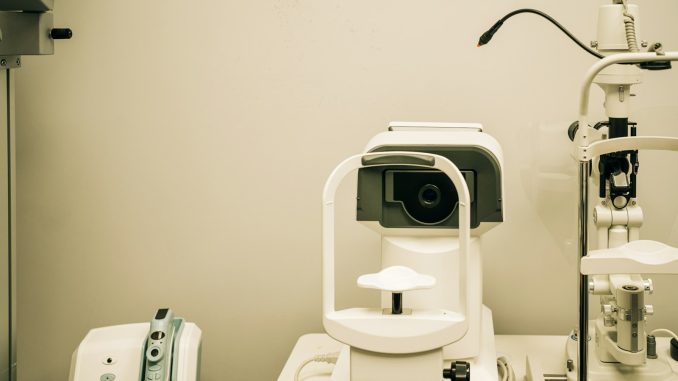
A new service launches in Newark this month, to help the almost 10,000 people living with glaucoma in Nottinghamshire, many of whom require regular check-ups to monitor the condition, described as the ‘silent thief’ of sight.
SpaMedica Newark, which opened in September 2021, will offer screening and treatment to NHS patients from its state-of-the-art hospital on Balderton Gate (NG24 1UN) from October 2025.
It is part of a roll-out of specialist ophthalmic services by SpaMedica, which has seen glaucoma clinics open at 13 of its hospitals nationwide.
It’s estimated that more than 700,000 people in the UK have glaucoma, with the condition accounting for around 20% of all outpatient appointments in hospital eye services. Worryingly, the number of people living with glaucoma is predicted to increase by almost a third between 2020-2035.
The new clinics introduced by SpaMedica since 2023 support NHS ambitions to allow more people to access treatments closer to home, and in their local community.
Claire Wood is Clinical Lead for Glaucoma at SpaMedica, a UK leading independent provider of NHS ophthalmology services. She explains: “Glaucoma can affect anyone, although the most common type of the disease – Primary Open Angle Glaucoma (POAG) – is more common as we age, rising from about two in 100 over the age of 40 to more than one in 20 in those aged 80-plus. Ethnicity and family history can also increase the likelihood of developing the disease.
“Unfortunately, some people experience no symptoms so are unaware they have it. Left undetected it can cause irreversible damage, which means regular eye tests – and treatment without delay – are crucial.
“The good news is we can offer NHS patients a fast-track referral service to our Newark hospital, so people can get the care they need locally.”
SpaMedica’s glaucoma care includes selective laser trabeculoplasty (SLT) as a first-line treatment for primary open angle glaucoma (POAG) where appropriate, as recommended by the National Institute for Health and Care Excellence (NICE). Patients’ vision is regularly reviewed once their condition is stable, with ongoing assessments by experienced clinical teams.
Local resident John Taylor recently gave the team a five-star review, describing his care as ‘superb throughout’. He said: “The clinical staff at Newark were 100 percent professional and respectful to me as a patient. Many thanks Newark SpaMedica.”
Glaucoma Fact File
What is glaucoma?
Rather than being one disease, glaucoma refers to a group of eye diseases that damage the optic nerve. The most common, known as primary open angle glaucoma (POAG), is painless and caused by the drainage channels in the eye becoming progressively congested. Unfortunately, often by the time a patient is aware of vision loss, the condition can be quite advanced.
Primary angle closure glaucoma (PACG) is when the pressure inside the eye rises very quickly. This type of glaucoma is less common and can be very painful.
Secondary glaucoma is the name used to describe glaucoma that occurs as a side effect to another underlying eye condition, inflammation or trauma.
Primary congenital glaucoma affects babies and small children, although it is rare. It occurs when the eye hasn’t developed properly in the womb, and this leads to issues with the flow of fluid out of the eye. Around five in 100,000 children are born with glaucoma, or develop it in childhood.
What are the symptoms of glaucoma?
Often, the only way to know you have glaucoma is by visiting an optician/optometrist for an eye test. Glaucoma can develop very gradually, and is likely to be without symptoms in its early stages. Sometimes, misty or blurry patches may be noticeable. When it becomes more advanced, glaucoma is likely to make daily activities such as reading or driving more difficult.
Is glaucoma genetic?
The likelihood of being diagnosed with some eye diseases – including glaucoma – is higher if you have a family member with the same issue. According to Glaucoma UK, there is at least a four times increased risk of developing glaucoma if you have a close blood relative (mother, father, sister, brother, child) with the condition. If you have glaucoma, you should tell your family about the condition as they may need to be tested too.
Ethnicity can also be a factor – people of African-Caribbean origin have around a four times increased risk of primary open angle glaucoma when compared to those of a European origin.
What happens if I’m diagnosed with glaucoma?
Following an eye test, if your optometrist has found signs you may be at risk of glaucoma, you will be referred to a glaucoma specialist. This doesn’t mean you definitely have the condition. A specialist will conduct more tests, and will then decide whether you have glaucoma, or are at an increased risk, and whether you need to start treatment or not.
How is glaucoma treated?
Damage caused by glaucoma cannot be reversed, but it is possible to stop or slow the progression of the condition. Eye drops to decrease the amount of fluid in the eye are the most common treatment for glaucoma. Laser treatment or surgery may also be offered – your specialist will discuss the right treatment for you.
Are cataracts and glaucoma related conditions? Am I more likely to get cataracts if I’ve got glaucoma?
For most people, there’s no direct link between glaucoma and cataracts, although exceptions include those who have glaucoma due to secondary causes such as eye inflammation or eye trauma. There is also a higher risk for those with developmental conditions, such as congenital rubella, which can cause glaucoma, cataracts or sometimes both.
Both glaucoma and cataracts are also more common with age, which is why many who have one disease may develop the other.
How does cataract surgery affect glaucoma?
Cataract removal can sometimes cause a change in the eye’s pressure, causing ‘pressure spikes’ after surgery. This is often short-term and can be treated with eye drops.
Every SpaMedica patient receives tailored treatment and the highest quality care when they come to us for cataract surgery. And while we don’t provide glaucoma treatment, we ensure that every medical need is taken into account when planning patients’ cataract surgery – in the case of patients who also have glaucoma, we work with their optometrist/specialist to adhere to existing treatment schedules.
Will I have to stop driving if I have glaucoma?
Losing a driving licence is a common worry for those diagnosed with glaucoma, yet the vast majority of people can continue driving – particularly if they are diagnosed early and follow the advice of their specialist (by taking eye drops as instructed, for example). However, those diagnosed with glaucoma in both eyes must inform the DVLA of their condition (and commercial drivers must tell the DVLA if they have glaucoma in one or both eyes).
