
Ask most women over forty-five what exercise they do and the answer is usually some form of cardiovascular activity: walking, cycling, swimming, running. All of it beneficial. None of it enough on its own.
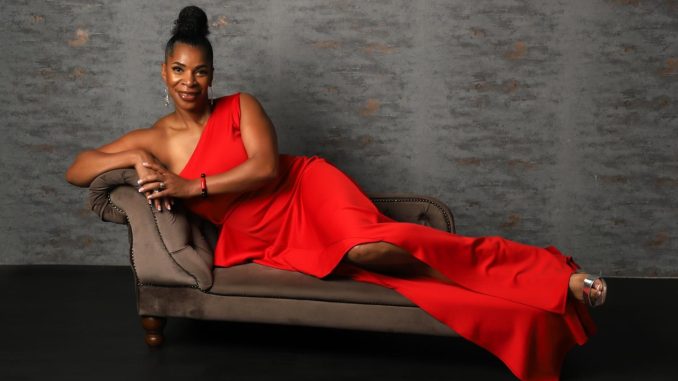
That, according to Janice Francis-Irwin, double World Karate Champion and founder of JFI Karate Academy, is the reality that the mainstream fitness conversation consistently fails to communicate to women. After forty-five, muscle is the priority.
The Science
From around the age of thirty-five, women begin losing muscle mass at roughly one to two per cent per year, a process known as sarcopenia. By the time a woman reaches her fifties, she may have lost a significant proportion of the functional strength she had in her thirties. That loss accelerates after menopause, when oestrogen, which plays a role in muscle maintenance, drops sharply.
The health consequences are serious: reduced metabolic rate, reduced bone density, reduced balance and coordination, and reduced functional capacity. The ability to climb stairs, carry shopping, get up from the floor with ease. Cardiovascular exercise does not address any of this directly. Only resistance training does.
Why Karate Delivers
Karate is a resistance-based practice. Every punch, kick and block engages multiple muscle groups simultaneously. The bodyweight movements at the foundation of karate, the stances, the transitions, the core engagement required for correct technique, build genuine functional strength without a single piece of gym equipment.
There is also a neuromuscular dimension that is frequently overlooked. Martial arts training improves reaction time, balance and coordination, because the practice demands them constantly. These qualities matter enormously in midlife. They are, in Francis-Irwin’s words, the difference between a stumble and a fall.
Francis-Irwin competed at international level into her early thirties, winning World and European titles whilst working full-time and raising four children, including a caesarean delivery. She knows from direct experience what it means to manage the physical changes that come with age in an active body. “The difference,” she says, “is almost entirely determined by whether a woman maintains resistance-based training.”
The Call to Action
The NHS recommends that adults over sixty-five undertake strength and balance exercises at least twice a week. Francis-Irwin argues, with the backing of growing evidence, that women should be building that foundation in their forties, not waiting until their sixties.
It does not require a gym. Karate, Pilates, yoga and bodyweight circuits all qualify, provided the training is deliberate, consistent and genuinely challenging.
“Your cardiovascular system will thank you for the walk,” she says. “Your skeleton, your metabolism and your future self will thank you for the strength work. Both matter. But if you are only doing one and you are over forty-five, you are probably doing the wrong one.”
JFI Karate Academy runs classes in Ilford and Romford. For further information visit www.jfikarate.co.uk
