
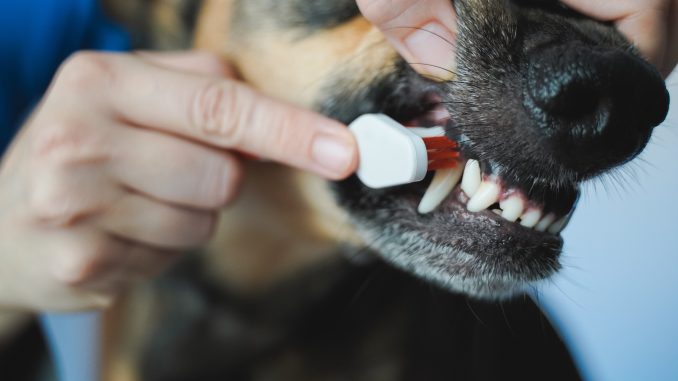
The Royal Veterinary College recommends brushing your dog’s teeth as the best home remedy for combating gum disease and controlling plaque.
However, according to a recent survey, 56% of owners rarely or never brush their dogs’ teeth, while only 7% claim to brush their dogs’ teeth daily.
This has given rise to the ‘chew epidemic’, with four in ten owners saying they rely on dog chews as a replacement for tooth brushing.
Ryan Whitman, Nutritional Lead and dog nutrition expert at Fish4Dogs explains why it’s essential to establish a full bedtime dental routine for your dog, which includes giving them chews AND brushing their teeth.
What are the benefits of dental chews?
Studies have shown that by the age of two, 80% of dogs already suffer from some form of dental disease. This occurs five times more often in dogs than in people, due to the lack of brushing and dogs’ mouths being more alkaline, promoting the formation of plaque.
Chewing is a good way to promote healthy dental care. The mechanical action of chewing can help promote saliva production, which naturally washes away food particle and bacteria. Meanwhile, the abrasive texture of many chews is good for removing tartar and plaque buildup.
Veterinary experts state that having the right chews is key. Anything too hard, such as antlers, bones, or hooves, may cause damage, and anything high in calories, sugar, or salt could result in additional weight or health problems. Soft chews, like dried fish skins, are preferable, as they are lower in calories and have the perfect texture for removing tartar from teeth.
What happens if you don’t brush your dog’s teeth after?
With over half of dog owners rarely or never brushing their dogs’ teeth, 39% of these rely solely on chews, and nearly 32% say their pooches have poor dental hygiene.
Many report symptoms of poor dental hygiene, such as yellow or brown buildup on their teeth (16%), followed by bad breath (9%). The two are synonymous with each other, as calcified plaque can cause foul-smelling breath.
Other signs your dog may be suffering from poor oral hygiene may include physical changes, like excessive drooling or swelling on one side of your dog’s face, which can make them resistant to facial handling. This may even indicate a tooth root abscess, which is the advanced stages of gum infection.
Any of these symptoms could be a sign of worsening tooth or gum issues in your dog. This can result in periodontitis and, eventually, tooth decay, tooth loss, and even bacteria entering your dog’s bloodstream, which could hurt their kidney, heart, or liver.
Spotting early signs of poor oral hygiene may also be visible in small behavioural changes that occur during mealtimes, such as:
#1 Not eating properly
If your dog starts dropping food or chewing out one side of their mouth, this can be an early warning sign that they are experiencing discomfort.
Keep a close eye on their eating over the course of a week and consider inspecting inside their mouth or taking them to a vet for further examination.
#2 Favouring soft food over hard kibble
If your dog has dental issues, hard pieces of kibble may be causing them pain, aggravating gum inflammation, or even irritating broken teeth.
This may make them reluctant to eat their usual food and only accept softer treats at mealtimes.
#3 Outright avoiding mealtimes
Similarly, dogs with dental issues – or undiagnosed periodontal disease – will likely appear increasingly lethargic, irritable, and even hide around the house when it’s time for food.
Dogs instinctively hide discomfort, so if they’re not present at mealtimes or hiding their food to ‘save it for later’, this could be a major sign of a deeper issue worth exploring.
While dental chews may be a good first step in improving your dog’s dental hygiene, they shouldn’t be the final stage in your dog’s dental journey.
Owners should engage in a consistent nightly wind-down routine, which starts with a chew, a gentle tooth-brushing session, and finally settling them down in a comfortable bed.
Your pet will thank you for it in the long run. If you spot any potential warning signs during mealtimes or need help introducing tooth brushing, visit your vet for further support.
