
It’s estimated that between three and six million people in the UK suffer from urinary incontinence (UI). The prevalence of UI among adults living in residential homes is thought to be as high as 60%; for nursing homes, it may be up to 85%, according to NHS data.
What is urinary incontinence?
Urinary incontinence is the unintentional leakage of urine at inappropriate times. There are six main types of UI.
• Stress UI – During activities like coughing, laughing, sneezing or exercising.
• Urge UI – A strong, and sudden need to urinate.
• Mixed UI – Mix of stress and urge incontinence. Sometimes you may leak urine with a laugh or sneeze.
• Temporary UI – Potential illness (e.g. urinary tract infection) causing frequent and sudden urination.
• OverFlow UI – (also known as chronic urinary retention) when the bladder cannot be fully emptied.
• Total UI – Cannot store urine at all, causing the passing of urine constantly, or frequently leaking urine.
What impact can UI have on wellbeing?
UI is widely known to have a significant impact on both physical and psychological wellbeing, affecting sufferers’ independence – particularly in care settings. Other effects include feeling stigmatised and experiencing depression, low self-esteem and anxiety.
Disrupted sleep as a result of UI can also contribute to poor mental health and exacerbate symptoms of conditions including dementia. Sufferers of chronic urinary retention, which can require catheterisation, may show signs of heightened distress, particularly if unable to properly communicate feelings of pain or discomfort.
How is technology improving incontinence care in care settings?
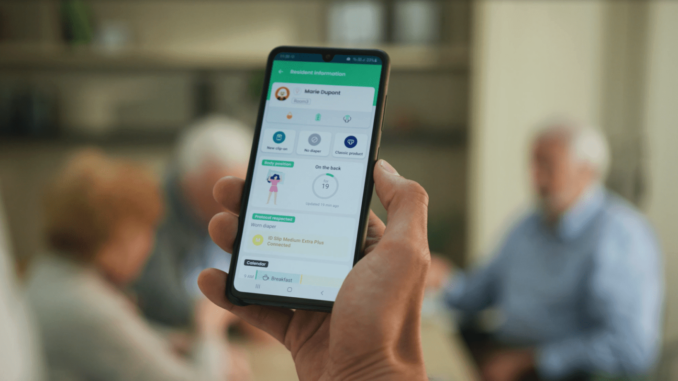
An innovative new device, the Orizon SMART, is a digital continence care assistive technology, which has been found to improve residents’ comfort, improve sleep hygiene, lessen the time burden on staff for unnecessary bed and clothing changes and reduce spend on continence containment products.
The solution, created by personal hygiene product manufacturer, Ontex, features a rechargeable transmitter clip that attaches to smart continence care products. The clip senses the presence of liquid and notifies caregivers when individuals require changing. It links to an app and presents a ‘traffic light’ system to help caregivers know when a change is necessary.
What positive outcomes have been reported from using the technology?
Product testing studies in care homes in the UK, France, Germany, Italy and Belgium have demonstrated many benefits of the Orizon SMART. Across all trials, pad usage was halved, there was a 28-minute reduction in workload per shift due to fewer pad changes, and an improvement in residents’ comfort and dignity was reported by 80% of caregivers.
The findings support the need to revolutionise continence care culture away from the current standard seen – routine 24 hour per day changing of pads – towards a personalised approach that puts residents’ wellbeing first.
Louise Heelan, Nurse Advisor for Ontex UK explains: “We’ve seen amazing results. For example, within two weeks of a trial in a UK care setting, residents with dementia were less agitated, as the Orizon SMART device meant they could sleep through the night without being disturbed unnecessarily. And the Germany trial reported zero bed linen changing due to leakage.”
Louise continues: “Orizon SMART isn’t about fewer checks on residents. The considerable reduction in time spent on changing means that time can be given back elsewhere – so it’s about using it better, for more positive interactions. It helps to ensure all residents are recognised as individuals.”
Further information about Orizon SMART is available at orizon-solutions.com.