
The relationship between horses and humans has existed for centuries. It’s believed that horses were first ridden by humans around 6000 years ago, and to this day we still share a special bond with the animals. However, for a long time many people weren’t able to experience the bond between humans and horses. Not only can owning a horse cost thousands every year, but they were mainly located in the rural countryside which made it difficult for inner-city dwellers to have access to them.
But the good news is that it’s become easier for people from a range of different backgrounds to have access to these magnificent creatures. Interested in finding out more? The equine experts at Horse & Country are here to explain how equestrianism is becoming more accessible.
No need to own a horse
It’s not uncommon for people to think they need to own a horse in order to take up riding. However, this isn’t the case at all. In fact, there are currently only 374,000 horse-owning households in Britain, which equates to less than 1% of the population (BETA). And as the number of regular riders currently stands at 1.8 million, it’s clear that a large portion of these horse-lovers don’t own one of their own, but instead use the horses provided to them in riding lessons.
This is great for horse-lovers on a budget, as it allows them to spend time with the animal they love without money worries spoiling the fun. Plus, between feeding, grooming, and vets visits, horse ownership can take up a lot of free time. But as horse ownership isn’t necessary, this means that people with busy lifestyles can still spend time with the animal without needing to consider horse maintenance.
Equestrian streaming channels
You don’t have to spend time with a horse in person to appreciate them. There are now a number of ways to stream equestrian content from the comfort of your own home. This direct digital access allows you to enjoy learning more about the animals or watching them compete without worrying about spending time and money you don’t have to take care of them. There are many options to choose from when it comes to finding horse content to stream, and some you can even do completely for free – including Horse & Country’s own free 24/7 linear stream, available via web & app.
Inner-city opportunities
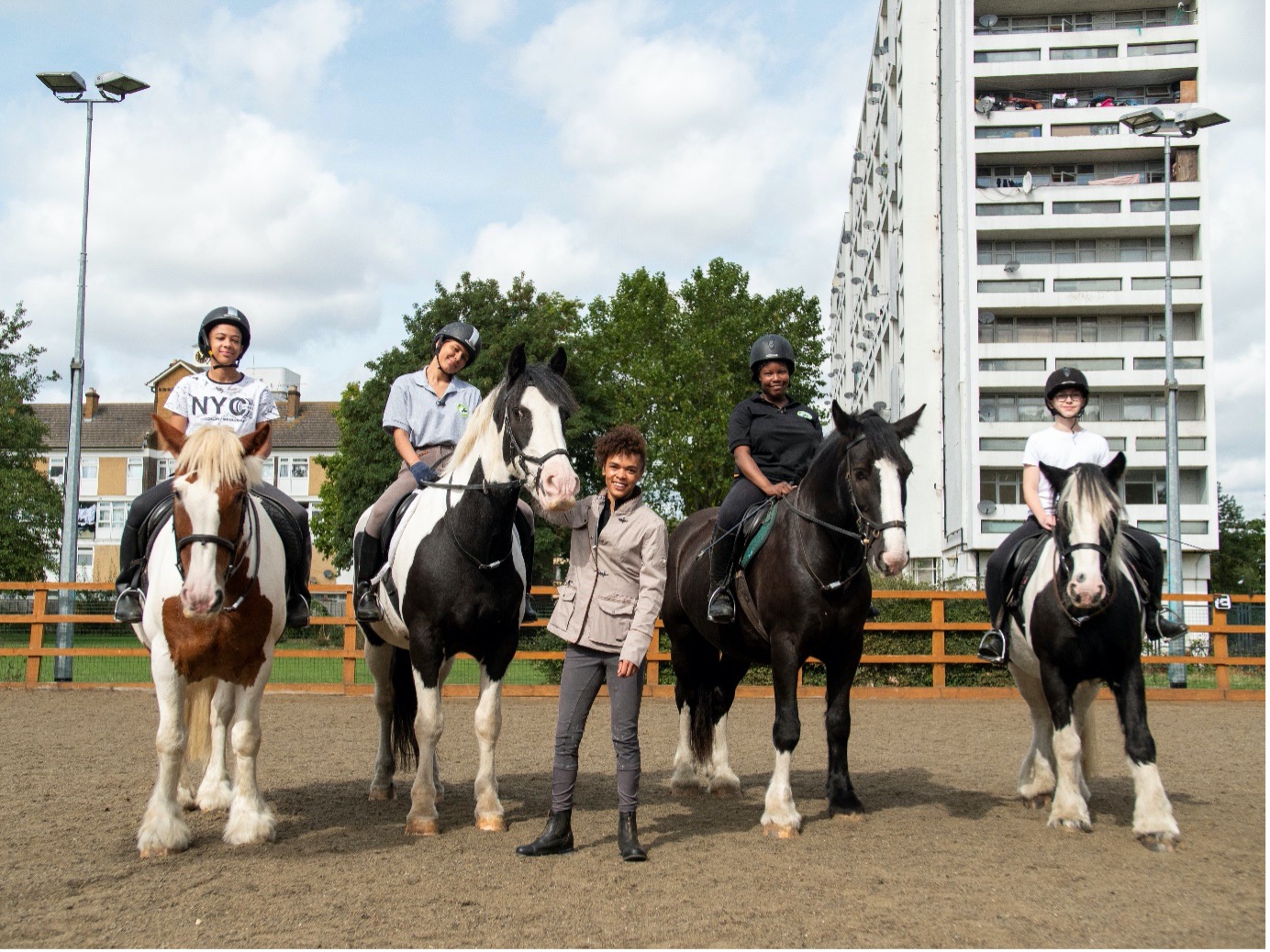
Many people assume that inner-city stables simply don’t exist, and it’s easy to see why. When you imagine a horse rider, you picture them roaming around a vast green field in a rural area. However, many cities are actually home to a great selection of stables. In fact, some of the most popular stables in the UK are located in cities (Country & Town House).
Not only are there a number of top-rated stables in cities across the country, but it’s possible to go riding in and around those cities too. London, for example, has an impressive 3000 parks – which cover 18% of the city – so there are certainly chances to find a yard with green space nearby.
Volunteering opportunities
This is a great way to both spend some quality time with horses for free and do some good too. Volunteering allows people who can’t afford to own a horse or have regular riding lessons to spend time with the animal they love, and maybe even get some riding lessons in return too.
There are a number of places to volunteer with horses, and as the pandemic restrictions are have eased and society is opening up more, there’ll no doubt be even more demand for hardworking volunteers. When it comes to finding a place to volunteer, try asking your local stable if they need a hand taking care of the horses. You could also try volunteering at a local horse charity, a sanctuary, or at nearby horse shows.
Equine therapy
One of the reasons horses are such fantastic creatures is the way they can help humans living with a range of health conditions. Equine therapy allows people living with both mental and physical health conditions to spend time with a horse, a horse handler, and a therapist to improve their overall wellbeing. A typical session includes completing exercises with the horse and discussing the experience with a therapist. Horses are used as therapy animals for a number of reasons, including their ability to reflect our emotions and communicate with us non-verbally.
Equine therapy allows people who may not have even considered spending time with the animals to have access to them. This type of therapy has grown in the UK over time and is now more accessible than ever before. While people can pay for equine therapy, it is sometimes prescribed to people on the NHS, and charities can also give free sessions to those who need it most – making it more accessible for people on low incomes too.
“For a long time, horses have sadly been inaccessible to many for a number of reasons – including not having the money, space, or resources to own one. Fortunately, equestrianism has become more accessible over time, and people are recognising that ownership is just one piece of the puzzle for horse lovers. Riding lessons at local stables allows riders the flexibility and benefits of enjoying horses and helps them improve their skills and learn new ones without having to make as big of a financial sacrifice.
“Also, the increasing number of city stables, and city riding programmes, means that horses aren’t just bound to the countryside – like many perceive them just to be. And equine therapy is now introducing these magnificent creatures to a whole new demographic – who will no doubt fall in love with them too.
“Lastly, but certainly not least, the option of streaming equestrian content is now rapidly changing the way that people can see and learn about the lifestyle and sport of equestrianism, within their own environment. It’s relatively cost-effective, allows the viewer to focus on their interests, and there is the opportunity to view anywhere, at any time. Plus, this way, there is the added benefit of not having to stand outside in miserable weather!”
- Katie Allen-Clarke, Director of Marketing at Horse & Country
About Horse and Country
Horse & Country is the leading international sports network for the passionate and active equestrian community. Headquartered in London, it is available globally via connected TVs, mobile and web and on leading digital and pay-TV platforms in the US, UK, Ireland, Germany, Austria, the Netherlands, Sweden, and Australia. Horse & Country’s programming line-up includes live coverage from leading sporting competitions in all equestrian disciplines, as well as training and learning shows, documentaries and entertainment.
To learn more, visit: https://horseandcountry.tv/
Further references and reading
https://www.britannica.com/animal/horse/Origin-of-horse-domestication
https://www.beta-uk.org/pages/industry-information/market-information.php
https://www.standard.co.uk/escapist/travel/where-to-go-horse-riding-in-london-a4098596.html
https://www.britishequestrian.org.uk/getInvolved/volunteering
https://www.counselling-directory.org.uk/equine-assisted-therapy.html
https://www.counselling-directory.org.uk/equine-assisted-therapy.html#willitworkforme
https://www.southwestyorkshire.nhs.uk/creative-minds-projects/equine-therapy/
