
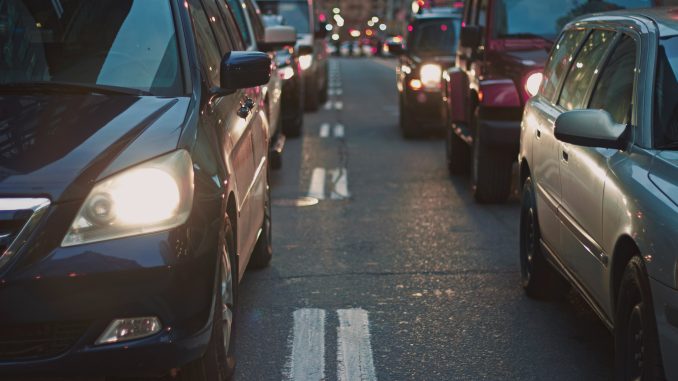
With Valentine’s Day falling on a Saturday this year, drivers planning romantic nights out are being warned they could face nearly an hour of extra delays as UK cities grind to a crawl.
Motoring experts at Scrap Car Comparison have analysed TomTom Traffic Index data and INRIX’s 2025 Global Traffic Scorecard to reveal that drivers travelling 15 miles into city centres for Valentine’s dinner this Saturday will lose an average of 51 minutes in traffic – with Londoners set to face delays of over an hour.
The analysis shows evening rush hour speeds in major UK cities drop to as low as 9mph on Saturday evenings, turning what should be a quick 30-minute journey to the city, into a frustrating hour-and-a-half crawl through gridlock.
The delays will add to the woes of city drivers, as INRIX’s 2025 Global Traffic Scorecard reveals UK drivers are already losing record hours to congestion, with Londoners wasting 91 hours a year stuck in traffic at a cost of £1,252 per driver.
Matt Clamp, Automotive Specialist at Scrap Car Comparison, said:
“Valentine’s Day falling on a Saturday this year is one of the worst-case scenarios for driving into city centres. Saturday evening traffic combined with restaurant districts packed with date-night diners creates the perfect storm for gridlock.
“Londoners will face the worst delays at over an hour, but Manchester and Edinburgh drivers aren’t far behind with nearly hour-long waits. These cities already have crawling rush hour speeds of just 9-10mph, turning a simple 15-mile journey into a 90-minute ordeal.
“What most drivers don’t realise is that sitting in stop-start traffic for an hour doesn’t just waste time and fuel – it’s actually costing them money in long-term vehicle damage. Modern cars are packed with electronics, and extended idling in congestion puts additional strain on engines and battery systems.
There’s a common myth that motorway miles are harder on cars, but in our experience it’s actually the opposite. City driving is one of the biggest contributors to premature engine-wear damage, electrical faults, and more. An hour of stop-start traffic puts far more stress on a vehicle than an hour of steady motorway cruising.”
Valentine’s delays: The worst cities for date night traffic
Drivers in London face the longest waits, with a 15-mile journey into the city centre taking over 100 minutes on Saturday evening; more than an hour longer than it should take:
- London: 1 hour 42 minutes (72 minutes longer than normal)
- Edinburgh: 1 hour 28 minutes (58 minutes longer than normal)
- Manchester: 1 hour 27 minutes (57 minutes longer than normal)
- Bristol: 1 hour 20 minutes (50 minutes longer than normal)
- Birmingham: 1 hour 6 minutes (36 minutes longer than normal)
- Leeds: 30 minutes longer (journey time: 1 hour vs 30 minutes)
The problem is worsened by the fact that these cities are already among the UK’s most congested.
Analysis by Scrap Car Comparison of INRIX and TomTom data shows London drivers lose 91 hours per year to traffic (costing £1,252 annually), Bristol drivers lose 64 hours (£881), Manchester 62 hours (£853), Leeds 59 hours (£812), Birmingham 57 hours (£784), and Edinburgh 51 hours (£702).
Valentine’s gridlock: The real cost to drivers
- Saturday evening speeds drop to 9-15mph in city centres, compared to typical 30mph free-flow speeds
- Restaurant districts see the biggest delays as date-night traffic peaks
- Stop-start crawling causes more engine wear than smooth driving, particularly damaging to modern turbocharged engines
- Extended idling drains batteries faster and can lead to electrical system faults in vehicles packed with modern electronics
- Fuel consumption increases dramatically in congested traffic – expect to use 2-3 times more fuel per mile at crawling speeds
- Allow at least double your normal journey time if travelling into city centres on Saturday evening
