
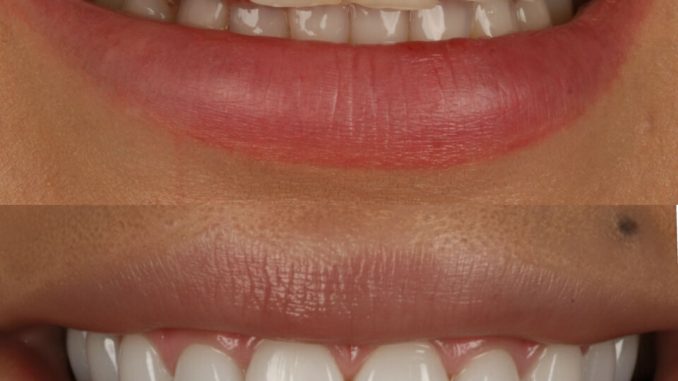
Cosmetic dentistry has long been associated with dramatic transformations: brighter shades, uniform shapes and rapid smile makeovers that prioritise visual impact over biological restraint. But a quieter shift is taking place within the profession, driven by changing patient expectations and growing concern about the long-term consequences of invasive cosmetic procedures. At the centre of this movement is the emergence of contact lens veneers, ultra-thin ceramic restorations designed to enhance, rather than replace, natural teeth.
In London, contact lens veneers are being introduced as a distinct treatment approach by Dr Rhona Eskander at Chelsea Dental Clinic, reflecting a broader re-evaluation of how cosmetic dental treatments should be delivered. Unlike traditional veneers, which often require substantial enamel reduction, contact lens veneers are engineered to be exceptionally thin and highly translucent, allowing for a more conservative application.
The appeal lies not only in aesthetics, but in preservation. Conventional veneers and crowns can involve irreversible tooth preparation, which may increase the risk of sensitivity, future restorative work and long-term structural compromise. Contact lens veneers, by contrast, are typically applied with minimal or no preparation, retaining significantly more of the original enamel while still correcting issues such as minor misalignment, uneven shape or tonal inconsistency.

This approach mirrors a wider trend across aesthetic medicine and wellbeing disciplines, where subtle enhancement and longevity are increasingly valued over dramatic alteration. Patients are no longer seeking uniform, high-gloss smiles, but results that integrate seamlessly with their natural features. As Dr Eskander notes, “Patients are increasingly asking for refinement, not replacement. The goal is for the work to be undetectable.”
From a clinical standpoint, contact lens veneers can offer practical advantages. They generally require less chair time than traditional veneers, involve up to 80 per cent less tooth reduction than crowns, and are more translucent, allowing light to pass through in a way that closely resembles natural enamel. This translucency contributes to a softer, more realistic appearance, particularly under natural light.
The growing interest in conservative veneer techniques also coincides with heightened scrutiny of fast-track cosmetic dentistry, including overseas smile makeover packages that prioritise speed and cost over long-term oral health. Dental professionals have increasingly raised concerns about aggressive tooth preparation and the irreversible nature of some cosmetic treatments, particularly when carried out without comprehensive assessment or follow-up care.
Contact lens veneers represent a counterpoint to this trend, not as a universal solution, but as part of a more considered treatment philosophy. While often associated with minimal-prep or no-prep techniques, they are not suitable for every patient, and careful case selection remains essential. Factors such as bite alignment, enamel quality and existing restorations all influence whether the technique is appropriate.
What distinguishes the current movement is not simply the technology itself, but the underlying mindset. Rather than pursuing exaggerated whiteness or uniformity, design-led cosmetic dentistry places emphasis on proportion, balance and facial harmony. As Dr Eskander explains, “This isn’t about bigger, whiter or more uniform teeth. It’s about proportion, balance and longevity. The best dental work should look like nothing has been done.”
As patient awareness grows and expectations continue to evolve, contact lens veneers may signal a recalibration within cosmetic dentistry, one that aligns aesthetic outcomes with wellbeing, restraint and respect for natural anatomy. In an industry often defined by visible change, the future may belong to treatments that leave no obvious trace at all.