
Society has become a health and wellness paradox – we have a greater understanding of health, both physical and mental, and medicine, than at any point in history. So combined with greater wealth and more freetime we would expect everybody to be fitter and healthier than ever before. However, across the western world the same trend continues – we become fatter, less fit and less healthy. In some countries, life expectancy is falling as obesity fuels more morbidities, including multiple forms of cancer, diabetes and heart disease.
This is leading to multiple problems, especially as we grow older. And the solution presented to us most often is driven by business and marketing – to spend money on expensive gyms, fitness clothing, diet meal plans and other schemes designed to help us lose weight and get fit, which often fail as people lose the motivation to continue exercising.
Our mental health is also negatively affected by increased ill-health and a lack of exercise, often leading to depression, anxiety and isolation, which exacerbates health problems, ultimately leading to weight gain and deteriorating health. Walking offers a sustainable, lifelong solution that doesn’t rely on willpower alone.
But, there is often a cheaper and easier solution at hand: walking. It is believed that humans evolved to walk, not to run, or swim, or ride bicycles, but to walk upright over large distances, often while hungry and in search of new food sources. So, it stands to reason that walking should be a natural approach to health and wellbeing – and science is now backing this idea. The NHS page Be active for your mental health provides some great info on this relationship.
Walking aids not only our physical health, by improving cardiovascular fitness and helping to manage weight (it is a great way to improve blood sugar levels after eating) but walking outdoors, especially in natural environments away from the urban sprawl, has been shown to improve mental health. And better mental health often means reduction in depression and anxiety, which is so often the cause of people giving up on those diet plans and group fitness classes.
Why is walking great?
Walking is a very accessible exercise. No equipment is needed, no fancy fitness clothing, and no training is required to get started. All you need to do is take a step outside your front door and keep walking.
As mentioned previously, we have evolved to be walkers. Our bodies are perfectly designed for ambling along over long distances, so there is very little risk of pulling a muscle or spraining a joint while walking – although a good sturdy pair of shoes is recommended if you plan to walk off-road.
Walking may not burn as many calories as running, but the average unfit person can walk much further than they can run. Walking is also more practical, and you don’t need to be fast, just consistent.
You can incorporate more walking into your daily shopping, and using a shopping trolley means you don’t need to carry your shopping. Or simply go for a walk during your lunch break if you work, or take a dog for a walk. There are also many accessible walking groups who arrange walks to explore the countryside.
And research has shown that walking outdoors in a green environment is excellent for our mental health, helping to ease anxiety and depression. The Wildlife Trust has been promoting nature for good mental health for many years now – getting back to nature not only improves your health, it saves the NHS money too, with fewer people requiring medical aid.
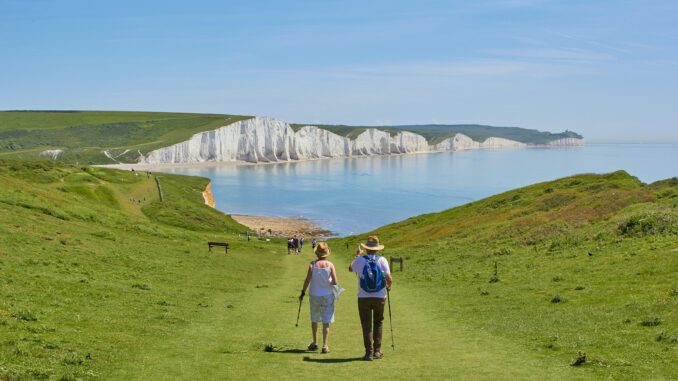
Above all, walking can give you a greater feeling of freedom – enjoying the rolling hills, woodlands or coastal paths is a great way to not only explore our beautiful island, but to find yourself.
Possibly the biggest advantage of walking is that we can continue to do it for many years – people in their 80s are often seen rambling across the countryside, often with the aid of a handy walking stick. Unlike other more intensive activities and sports, walking doesn’t generally result in injury, and you do not need to be in a competitive team to participate.
With Mental Health Awareness week just around the corner, now is the perfect time to explore how walking in the great outdoors (or just the local park) can help you become a less stressed, less anxious, and generally happier individual. A walk might not solve every problem, but it’s often a good place to start, so grab a pair of shoes and head outside!
Image Source: Unsplash