
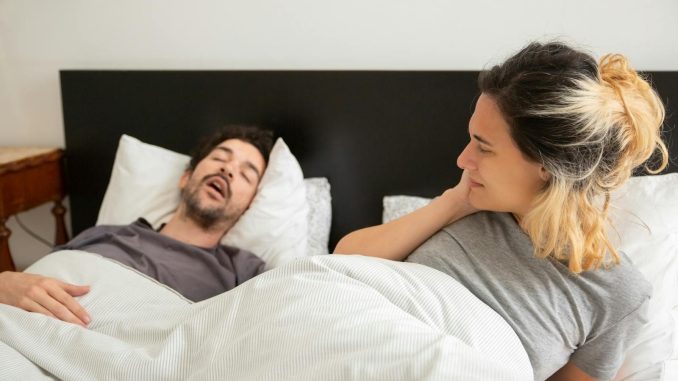
Snoring is extremely common, affecting around 40% of adults in the UK, with men more likely to snore than women.
Today, there are a lot of tried and tested methods to help with snoring and some others which are more experimental depending on the individual.
Snoring occurs when airflow is partially blocked during sleep, causing the tissues in the throat to vibrate. This can be influenced by factors such as sleeping position, nasal congestion, weight, alcohol consumption, and the structure of the airway.
In more severe cases, it may be linked to Obstructive Sleep Apnoea (OSA), a condition that affects approximately 1.5 million people in the UK, although many cases remain undiagnosed.
What non-surgical treatments can help reduce snoring?
Non-surgical treatments are usually the first step and can be highly effective for mild to moderate snoring. One of the most widely recommended approaches is lifestyle adjustment, particularly improving sleep posture. Sleeping on your side instead of your back can prevent the tongue from falling backwards and blocking the airway. Elevating the head slightly can also help keep airways open.
Another common solution is the use of a Continuous Positive Airway Pressure (CPAP) machine, particularly for individuals with sleep apnoea. This device delivers a steady stream of air through a mask to keep the airway open during sleep. While highly effective, it is typically prescribed for more severe cases.
Can dental treatments help stop snoring?
Dental solutions are among the most effective non-invasive treatments for snoring and it falls under dental sleep medicine.
Custom-made oral appliances, often provided by dentists, work by gently repositioning the lower jaw forward to keep the airway open. These are commonly known as mandibular advancement devices and are widely used for both snoring and mild to moderate sleep apnoea.
Because dentists are trained in oral anatomy, they can tailor these devices for comfort and effectiveness. Studies suggest that oral appliances can reduce snoring in up to 70% of cases, making them a popular option for long-term management.
Do snoring strips and over-the-counter devices actually work?
Over-the-counter products such as nasal strips and dilators are often the first solutions people try. Nasal strips work by opening up the nasal passages, which can improve airflow and reduce snoring caused by congestion. Internal nasal dilators function in a similar way but are inserted in the nostrils.
Other devices, such as anti-snoring mouthpieces and chin straps, aim to keep the airway open or encourage better breathing patterns. While these products can be effective for some people, particularly those with mild snoring, their success rate varies. Research suggests that nasal strips can improve airflow by up to 30%, although they may not address deeper airway obstructions.
Can diet and lifestyle changes reduce snoring?
Diet and lifestyle play a significant role in snoring, particularly when weight and alcohol consumption are factors. Excess weight, especially around the neck, can put pressure on the airway and increase the likelihood of snoring. Losing even a small amount of weight can make a noticeable difference.
Alcohol is another major contributor, as it relaxes the muscles in the throat, making airway collapse more likely during sleep. Avoiding alcohol in the evening can significantly reduce snoring. In addition, maintaining good sleep hygiene and addressing allergies or nasal congestion can further improve breathing at night.
When should you consider surgical options for snoring?
Surgical treatments are usually considered only when other options have failed or when there is a clear anatomical issue causing the snoring. Procedures offered by snoring specialists such as Ryan Cheong can include removing excess tissue from the throat, correcting a deviated septum, or stiffening the soft palate to reduce vibration.
One example is uvulopalatopharyngoplasty (UPPP), which removes or reshapes tissue in the throat to widen the airway. Another option is radiofrequency ablation, which uses energy to shrink soft tissues.
These procedures are typically carried out by an ear, nose, and throat specialist, often referred to as an ENT consultant.
Which specialists can help diagnose and treat snoring?
If snoring is persistent or severe, it is important to seek professional advice. General practitioners are usually the first point of contact and may refer patients to specialists such as ENT doctors, sleep clinics, or dentists with expertise in sleep-related breathing disorders.
A proper diagnosis is particularly important if symptoms suggest Obstructive Sleep Apnoea, as untreated cases can increase the risk of high blood pressure, heart disease, and daytime fatigue. Sleep studies may be recommended to assess breathing patterns and determine the most appropriate treatment.
What is the most effective way to stop snoring long term?
The most effective treatment depends on the underlying cause of the snoring. For many people, a combination of lifestyle changes and non-invasive treatments such as dental devices or nasal aids can provide significant relief. For others, particularly those with sleep apnoea, medical devices or specialist interventions may be required.
Overall, addressing snoring early can improve not only sleep quality but also overall health and wellbeing. With a wide range of treatments available, most people can find a solution that works for their specific needs.
