
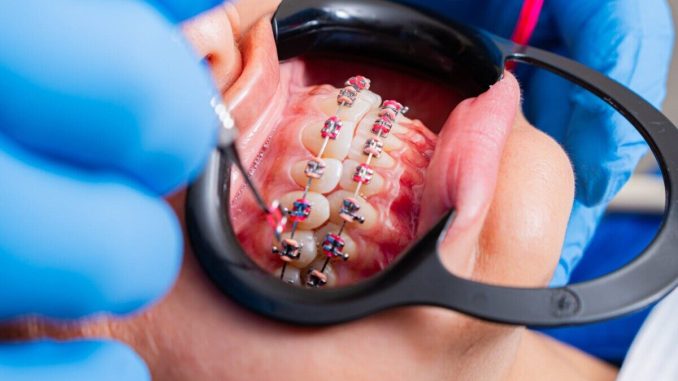
More adults across the UK are choosing to wear braces in a bid to achieve the perfect smile and boost their confidence. Once associated almost entirely with teenagers, orthodontic treatment is now increasingly common among people in their 20s, 30s and even later in life.
Recent data highlights just how strong the trend has become. Around 80 per cent of UK orthodontists report an increase in adult patients, showing a clear shift in demand. At the same time, an estimated 200,000 people begin orthodontic treatment each year in the UK, with a growing share of them adults.
Experts say this rise reflects changing attitudes towards appearance, as well as greater awareness of modern dental treatments.
The rise of discreet, modern braces
A key reason behind the surge is the development of more subtle and flexible options. Traditional metal braces, once seen as bulky and obvious, are no longer the only choice.
Clear aligners and ceramic braces have transformed the experience, making treatment far more appealing to adults. These newer options are often described as “virtually invisible”, allowing people to straighten their teeth without drawing attention.
Search data also shows how interest is growing. Online searches for clear aligners in the UK rose by 66 per cent between 2022 and 2024, with a further 23 per cent increase the following year. This suggests demand is accelerating, particularly among working professionals.
Minimally invasive and barely noticeable
One of the biggest changes in orthodontics is how minimally invasive treatment has become. Modern aligners are removable, lightweight and designed to fit comfortably into everyday life.
Unlike traditional braces, there are no wires or brackets, and many treatments involve gradual adjustments rather than frequent tightening. This makes the process less painful and easier to manage alongside work and social life.
Clear aligners are especially popular because they can be taken out when eating or brushing, meaning there are fewer lifestyle restrictions. Many users report that most people do not even notice they are wearing them, making them ideal for adults who may feel self-conscious.
This shift has removed one of the biggest barriers to treatment. In the past, concerns about appearance and discomfort often stopped adults from seeking orthodontic care. Today, those concerns are far less significant.
Confidence driving demand for adult braces
“Improving confidence is one of the main reasons adults choose braces,” explains Neville Bass, founder of Bass Orthodontics. “A straighter smile is often linked to better self-esteem, particularly in professional and social settings.”
Surveys show that many adults seek treatment not just for health reasons, but to feel better about their appearance. In fact, studies suggest a large proportion of adults report increased confidence after completing orthodontic treatment.
Dentists say this is especially true for people who may have missed out on braces as teenagers or whose teeth have shifted over time. Others are motivated by career reasons, as appearance can play a role in customer-facing roles and public-facing industries.
Invisible braces become a lifestyle-friendly treatment
Modern braces are designed to fit around busy adult lifestyles. Treatments are often quicker than in the past, with some options delivering results in as little as six to twelve months for mild cases.
Appointments are also less frequent, and digital technology allows patients to track progress more easily. This convenience has made orthodontic care more accessible to people who may not have considered it before.
There is also a growing emphasis on prevention. Dentists note that correcting alignment issues can help avoid future problems such as tooth wear or gum disease, making braces both a cosmetic and practical choice.
The cost of a perfect smile
While demand is rising, cost remains a key factor. In the UK, traditional braces typically cost between £1,500 and £3,500, while clear Invisalign braces can cost from £2,500 to £4,000 depending on the complexity of treatment.
The cost of braces can vary whether you have a single or dual arch, or have to keep coming back for adjustments if the case is a bit more complex or the aligners have not been worn properly.
For many adults, this is a significant investment, especially as most treatments are not available on the NHS. However, flexible payment plans and growing competition among providers have made treatment more accessible.
Despite the cost, many patients see it as worthwhile. The long-term benefits, both cosmetic and medical, are often cited as justification for the expense.
A shift in perception of braces as an adult
Perhaps the most notable change is how society views braces. What was once seen as awkward or embarrassing is now widely accepted, and in some cases even fashionable.
Social media has played a role in normalising adult braces, with users sharing their treatment journeys and results. This visibility has helped remove stigma and encouraged more people to consider treatment.
As technology continues to improve and awareness grows, experts expect the number of adults choosing braces to keep rising. What was once a teenage milestone is now becoming a common step for adults looking to improve both their smile and their confidence.